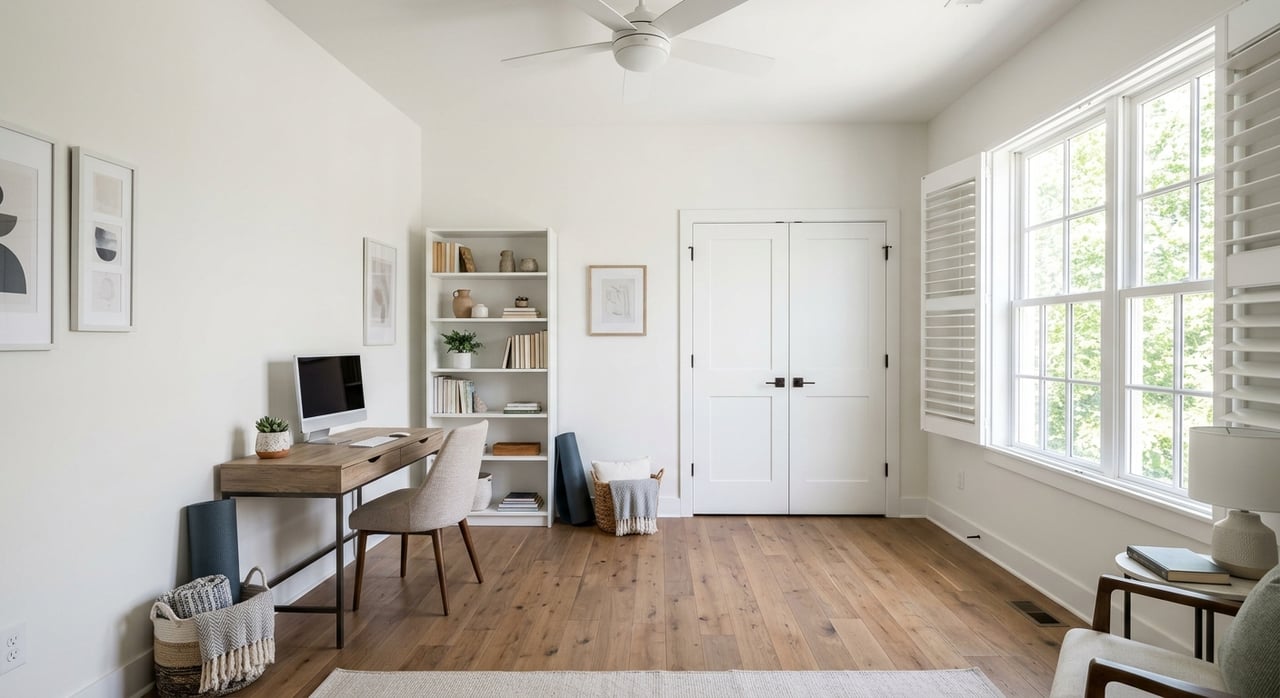
Looking for a Roswell home where you can record, mix, edit, and still live comfortably? That search can get tricky fast because a house that feels great for everyday life does not always work well for a music or creative studio. If you want a smarter way to evaluate studio-friendly homes in Roswell, this guide will help you focus on layout, acoustics, local rules, and property restrictions before you make a move. Let’s dive in.
What makes a Roswell home studio-friendly?
A good studio home usually starts with separation of space. If you can divide recording, editing, and storage into different areas, you have more control over sound and day-to-day function. In many homes, enclosed secondary rooms are easier to adapt than one large open-plan area because acoustics are more predictable and easier to manage.
According to Neumann’s home studio guidance, small rooms are prone to low-frequency resonances, and treatments like bass traps and ceiling treatment matter. The same guidance notes that dedicated isolation or vocal booths can be useful when you need separation, not just a drier sound. That means the right house is often the one that gives you options, not just square footage.
Prioritize flexible room layouts
When you tour homes in Roswell, look for a floor plan that supports multiple functions. A basement, bonus room, finished lower level, or enclosed secondary bedroom can create better studio zones than a single open living area.
A practical setup might include:
- A main room for recording or mixing
- A separate space for editing or production
- A storage area for instruments, cables, and equipment
- A path that keeps gear movement away from the quietest part of the home
Ceiling height matters more than many buyers expect
If you plan to track live instruments or vocals, ceiling height can make a real difference. Berklee’s studio-design material highlights professional recording rooms with 15-foot ceilings, which shows why taller spaces are valued for acoustic flexibility.
In a Roswell home, that does not mean you need a commercial-grade live room. It does mean taller basements, vaulted bonus rooms, or rooms with more vertical volume may give you a better starting point than a low-ceilinged box.
Why room acoustics shape your home search
A studio-friendly home is not just about whether a room exists. It is about whether the room can be improved without fighting the house at every step.
Neumann notes that low-frequency buildup is a common issue in smaller rooms, while Berklee emphasizes the value of room-within-a-room construction, along with changes to room size, shape, proportions, and materials. In real-world home buying, that means some Roswell homes will be far easier to adapt than others.
Look for rooms that can be controlled
Enclosed rooms usually offer more predictable results than open great rooms. If a space already has a shape and layout that lets you isolate sound and manage reflections, your build-out may be simpler.
As you walk through a home, pay attention to:
- Room dimensions
- Ceiling height
- HVAC vent placement and noise
- Shared walls with primary living spaces
- Whether the room is near the street or tucked deeper into the house
Think beyond the studio room itself
A workable creative home also needs support space. You may need room for cases, stands, amps, production gear, or video equipment. You may also want a quiet workspace separate from the main recording area.
That is one reason homes with basements, bonus rooms, or other enclosed extra spaces tend to be easier to adapt. The layout gives you a better chance to separate loud functions from quiet ones.
Roswell rules for home-based studio use
Before you fall in love with a property, make sure your intended use fits Roswell’s local rules. The city treats home-based business use as a regulated residential use.
Roswell’s business registration page states that residential property used for business purposes requires a business license or Occupation Tax Certificate, and home-based businesses are subject to Article 9.7.11 of the Unified Development Code. The code summary says a home occupation must be conducted wholly within the dwelling, is capped at 750 square feet or 25% of the dwelling, whichever is less, and the exterior appearance must remain residential.
Home occupation limits to know
If you plan to operate a music or creative business from home, these points matter:
- The business use must remain secondary to the residence
- The exterior must keep a residential appearance
- The workspace size is limited by city code
- A home-based business requires an Occupation Tax Certificate
Roswell’s code-enforcement guide also summarizes practical limits that matter for studio users. It notes that amplified sound or outdoor performances are not allowed after 10 p.m. Sunday through Thursday or after 11 p.m. Friday and Saturday. It also outlines parking limits, including the requirement that parking in single-family residential districts be on a hard-surfaced driveway, with no parking in grass or lawn areas, and that street parking is restricted to 12 hours.
Noise and parking are part of the decision
If you plan to have clients, collaborators, or vendors visit the property, parking is not a small detail. A home may have the right room for a studio but still be a poor fit if guest vehicles create regular friction.
Roswell also has a nuisance-complaint process that can move quickly, with an initial inspection scheduled for the following business day. For buyers looking at studio use, this is a reminder that sound control and parking discipline need to be part of your home search from day one.
Remodeling a Roswell home for studio use
Many buyers assume acoustic upgrades are cosmetic. In some cases, they are not.
If you plan to add electrical improvements, framing, acoustic isolation, or other construction features, Roswell’s Building Permits and Inspections division handles permit review and inspections for residential structures. The city also enforces state minimum building and fire codes, so substantial studio improvements should be evaluated as permitted work, not informal add-ons.
Build-out questions to ask early
Before you close on a home, ask yourself:
- Will the studio need electrical upgrades?
- Will you need insulation, framing, or isolation work?
- Will the HVAC setup create noise issues?
- Will any changes trigger permits or inspections?
Asking these questions early can help you avoid buying a house that looks promising but becomes expensive or complicated to adapt.
How location within Roswell affects studio use
Not every part of Roswell presents the same tradeoffs. Street context, traffic exposure, and review overlays can all affect how practical a property will be for music or creative work.
For example, Roswell describes the Town Square and Atlanta Street corridor as a major commuter thoroughfare. By extension, buyers who want quieter tracking conditions may want to pay closer attention to homes on interior residential streets, properties with more setback, or lots with better buffering from arterial traffic.
Historic District considerations
If exterior flexibility matters to you, it is important to know whether a home sits in Roswell’s Historic District or another design-review area. The city states that the Historic Preservation Commission handles design review in the 640-acre Roswell Historic District, and property owners or occupants there must obtain approval for external material changes, including certain exterior modifications.
That does not mean a home there cannot work for a studio. It does mean you should verify how any exterior-related plans might be reviewed before you count on them.
Do not skip HOA review
City approval is only one layer. HOA documents may create additional restrictions that affect studio use.
Gwinnett County’s HOA guidance explains that an association administers covenants for the development and can take legal action to enforce them. In practice, that means you should carefully review the declaration, architectural guidelines, and use restrictions before assuming your intended setup is allowed.
HOA questions that matter for studio buyers
Look for rules related to:
- Home-based business use
- Guest or client parking
- Exterior appearance
- Equipment visibility
- Architectural review for modifications
Even if Roswell allows a home occupation, the HOA may still limit how that use functions on the property.
A showing checklist for studio-minded buyers
When you tour homes in Roswell, it helps to have a repeatable checklist. That way, you can compare properties based on real studio needs, not just finishes or curb appeal.
Use this simple walkthrough list:
- Measure rooms you may use for recording or mixing
- Check ceiling height in those spaces
- Listen for HVAC noise
- Ask about off-street parking for visitors or vendors
- Confirm whether the property is in the Historic District or another review area
- Verify that the planned use fits Roswell home-occupation rules
- Review HOA covenants before moving forward
A house does not need to be perfect on day one. It needs to offer a layout and legal framework that make your goals realistic.
Finding the right fit in Roswell
If you work in music, audio, or content production, the best Roswell home for you is usually the one that balances livability, acoustic potential, and compliance. A flexible layout, taller or more adaptable rooms, manageable noise exposure, and clear rules around home-based use can all make a major difference.
That is where having a local advisor who understands both residential real estate and creative-space needs can save you time. If you want help finding Roswell homes that match your studio goals, connect with Richie Torrance for guidance tailored to the way you live and create.
FAQs
What property features matter most for a Roswell home music studio?
- The most useful features are enclosed secondary rooms, flexible floor plans, space for separate recording and editing areas, storage, and ceiling height that gives you more acoustic flexibility.
What are Roswell home occupation rules for a music or creative studio?
- Roswell requires residential property used for business purposes to have an Occupation Tax Certificate, and home occupations must be conducted within the dwelling, remain secondary to the residence, and stay within the city’s size limits.
What noise rules apply to a Roswell home studio?
- Roswell’s code-enforcement guide says amplified sound or outdoor performances are not allowed after 10 p.m. Sunday through Thursday or after 11 p.m. Friday and Saturday.
Can an HOA limit a Roswell home-based recording studio?
- Yes. HOA covenants may affect home-based business use, parking, exterior appearance, and modifications, even if the city would otherwise allow the use.
Do Roswell studio renovations need permits?
- If your project involves acoustic build-out, electrical work, or other substantial remodeling, you should expect Roswell permits and inspections to apply.
Are homes near busy Roswell roads harder to use for recording?
- They can be. Homes on quieter interior residential streets or with more setback and buffering may offer better conditions for tracking and other sound-sensitive work.
